
During the Blitz my diarist June Spencer lived at Lindsey House in Cheyne Walk, a 17th-century mansion a stone’s throw from the river at Chelsea. Over the years the house was divided into separate homes. In the 19th century residents included the painters John Martin and James McNeill Whistler, and engineer Isambard Kingdom Brunel and his father Marc.
By the mid 20th century, Richard Stewart-Jones owned many of the residences. He let numerous rooms to his friends and acquaintances, anyone he deemed interesting, musicians (he liked to hold soirées) and, during wartime, people employed in war work. The atmosphere, to begin with at least, was friendly, fun and young.
The building was run down – peeling paint and crumbling plaster – and, during the Blitz, battered by incendiaries and bombs. Stewart-Jones served in the merchant marine and his mother and sister were left in charge of the house, along with the ferocious family nanny, Christiana Sams, whose job included making sure there were no shenanigans between the male and female lodgers.
June’s room on the 4th floor of No. 97 Cheyne Walk was her place of refuge, a haven after gruelling shifts at the ambulance station in Danvers Street where she was a driver for the London Auxiliary Ambulance Service. It was here that she held tea parties, gossiped with her friends, sewed (she was a dress designer), and stood on the balcony to watch enemy bombers, using the silvery arrow of the Thames as a guide, sweep their way to targets across London.
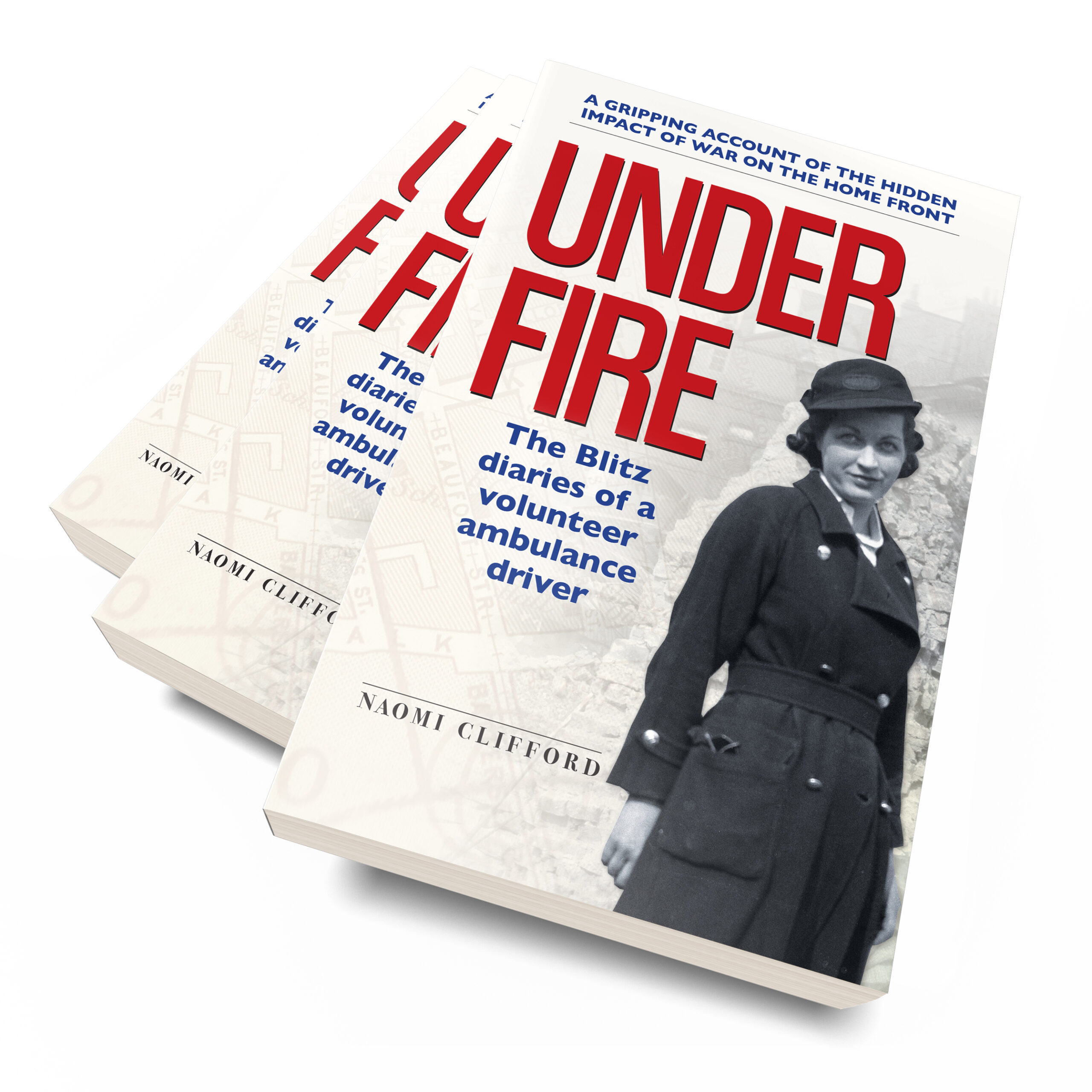
Under Fire: The Blitz Diaries of a Volunteer Ambulance Driver

“A writer who does their research so thoroughly and then wears their learning so lightly”
“Fabulous blend of diary accounts and social history”
The Blitz in London through the diaries of a volunteer ambulance driver, from dancing at the Grosvenor to incendiary bombs in the roof
In the summer of 1940 June Spencer volunteers for the London Auxiliary Ambulance Service in Chelsea. Every night she writes up the day’s events in her diary, whether it’s driving in a hail of incendiaries, peeling potatoes for the crews, or loading broken and bleeding …





My mother , Diona Stewart Jones, was Rick’s older sister and spent much time in Lindsey Palace. She sang German songs by Schuman ans Schubert in the big room at 96. Met my father there in late 30’s and they married in Chelsea Old Church in Nov. 1940. She is said to have doused a fire in the roof with a bucket of sand , and tarpaulin covered the hole as slates were scarce!!
Uncle Rick’s plan to reunite the houses was always a pipe dream!!
Hope this is of interest.
This is of immense interest, David. Thank you so much for contributing.
My diarist June, an auxiliary ambulance driver and friend of Ric’s who lived at Lindsey House, attended your mother’s wedding.
This is what she wrote:
“Saturday November 23rd [1940]
…Di’s wedding at Chelsea Old Church 12.30pm. Nice service. The choir consisted of mainly old Cheyne Walk past and present. Pen arrived in the middle in uniform from Coventry where she had been with her mobile canteen. On to reception in the ballroom [illegible] and no champagne. Diana looking lovely. Saw Di and Patrick away and then all to the [illegible] with the Waterfields. Very arty party. More arrived for drinks and Tony Waterfield & I went to Daphne C’s 21st birthday party at Cranmere Court. Di was very sweet. Party given by Miriam Class. On to Suivi’s with odd collection where we danced until 4.”
There is much more about life at Lindsey House in my book Under Fire: The Blitz Diaries of a Volunteer Ambulance Driver.
My mother recalled driving ambulances up the East End, Bermondsey and there abouts. But spoke little of it. She and Dad had a leave early in 1944 , before he prepared for D- Day , during which I was conceived, however by then Doodlebugs were raining on London and terrified her disabled youngest brother living with Joan SJ , so family decamped to house in Berkshire. I was born late in Oct.1944 at Newbury Maternity. Her sister with child Susan went as well , born in 1942. In the absence of fathers, the Stewart Jones siblings and cousins became very close to each other from early years , which my mother missed when she moved to Edinburgh in 1946